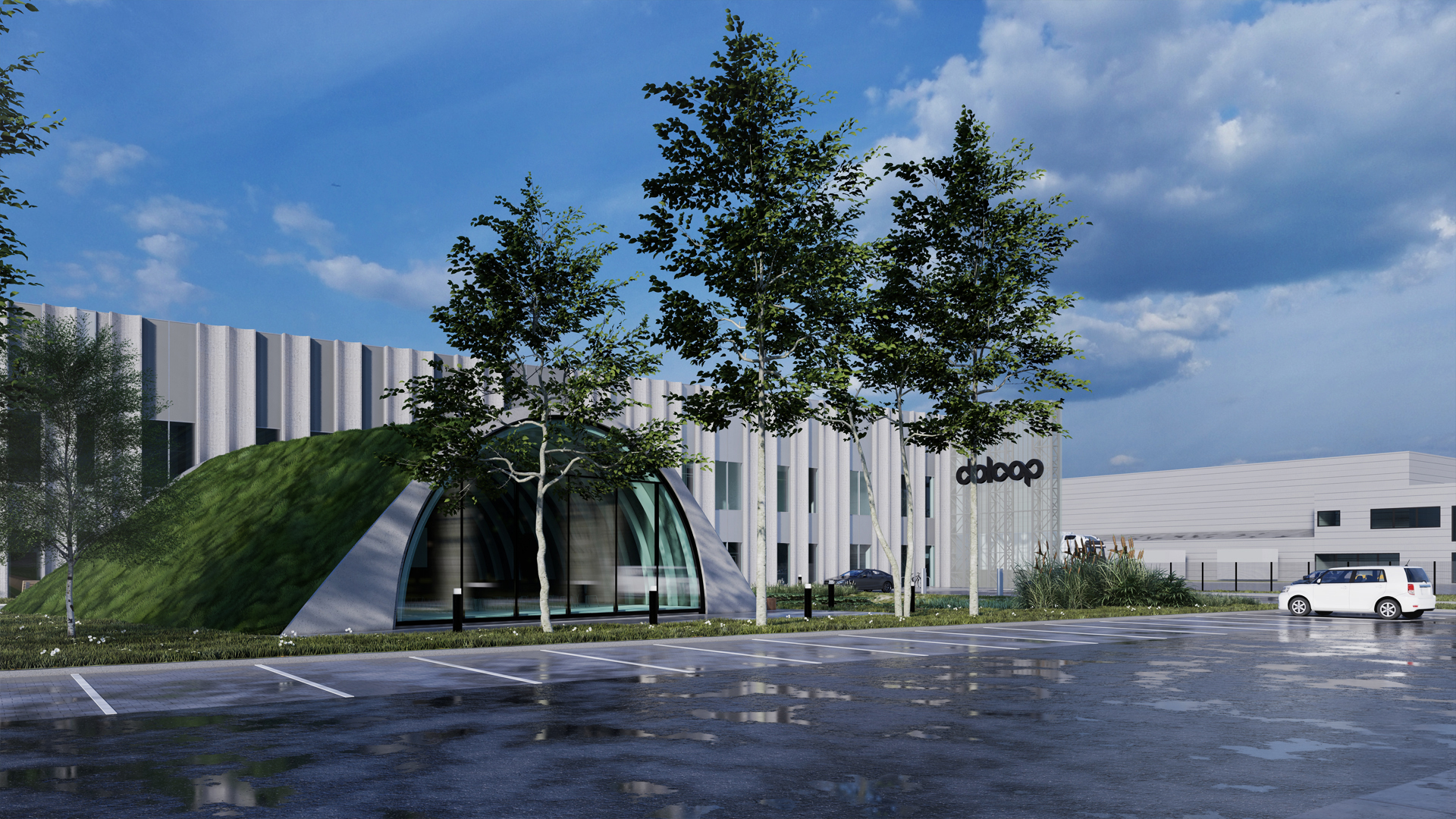



Morenowe School – Gdansk, Poland
- Location Gdansk, Poland
- Type Educational
- Size 2820 m²
- Year 2021 - 2025
- Status Completed
- Client Deuteros Izim Edu
- Images Emi Karpowicz
- Project lead Viktorija Blažienė, Paulius Latakas
- Authors Rūta Vitonytė-Bružienė, Simonas Norkus, Goda Pazukaitė, Viktorija Blažienė. In collaboration with APB Architektura - Monika Lew, Piotr Lew, Narcyz Sienkiewicz, Urszula Gruszewska, Patryk Tarnowski, Anna Polańska
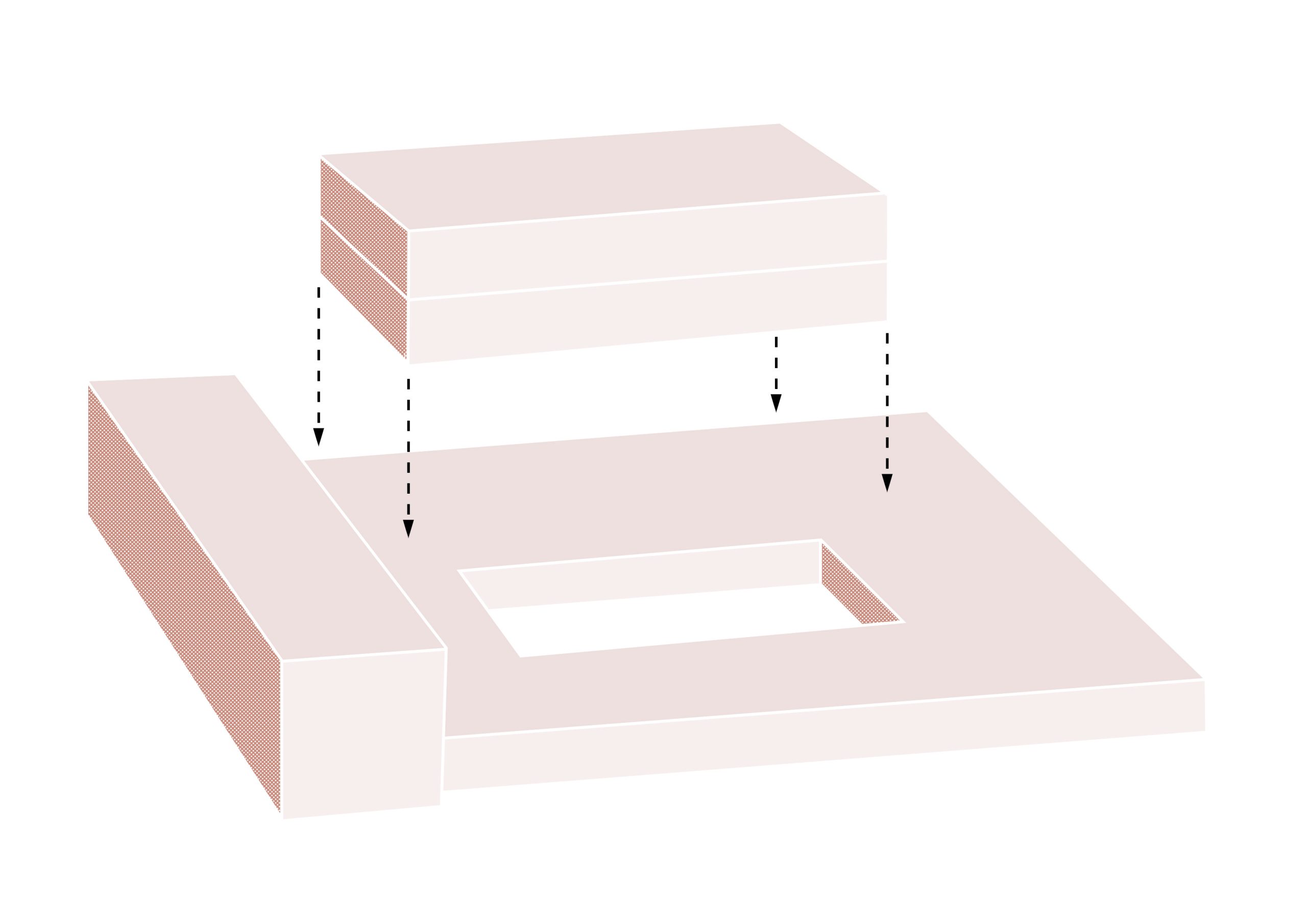
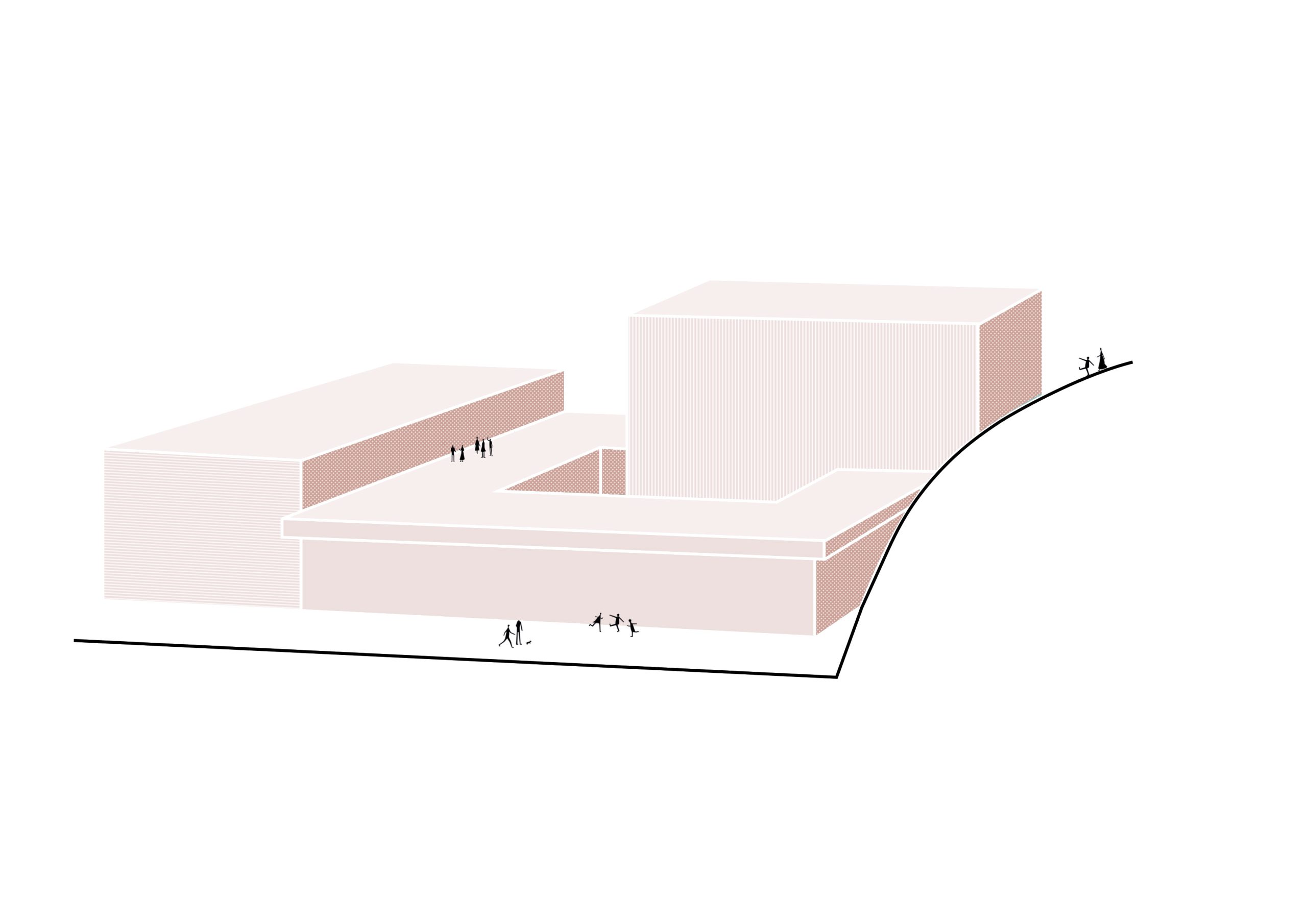
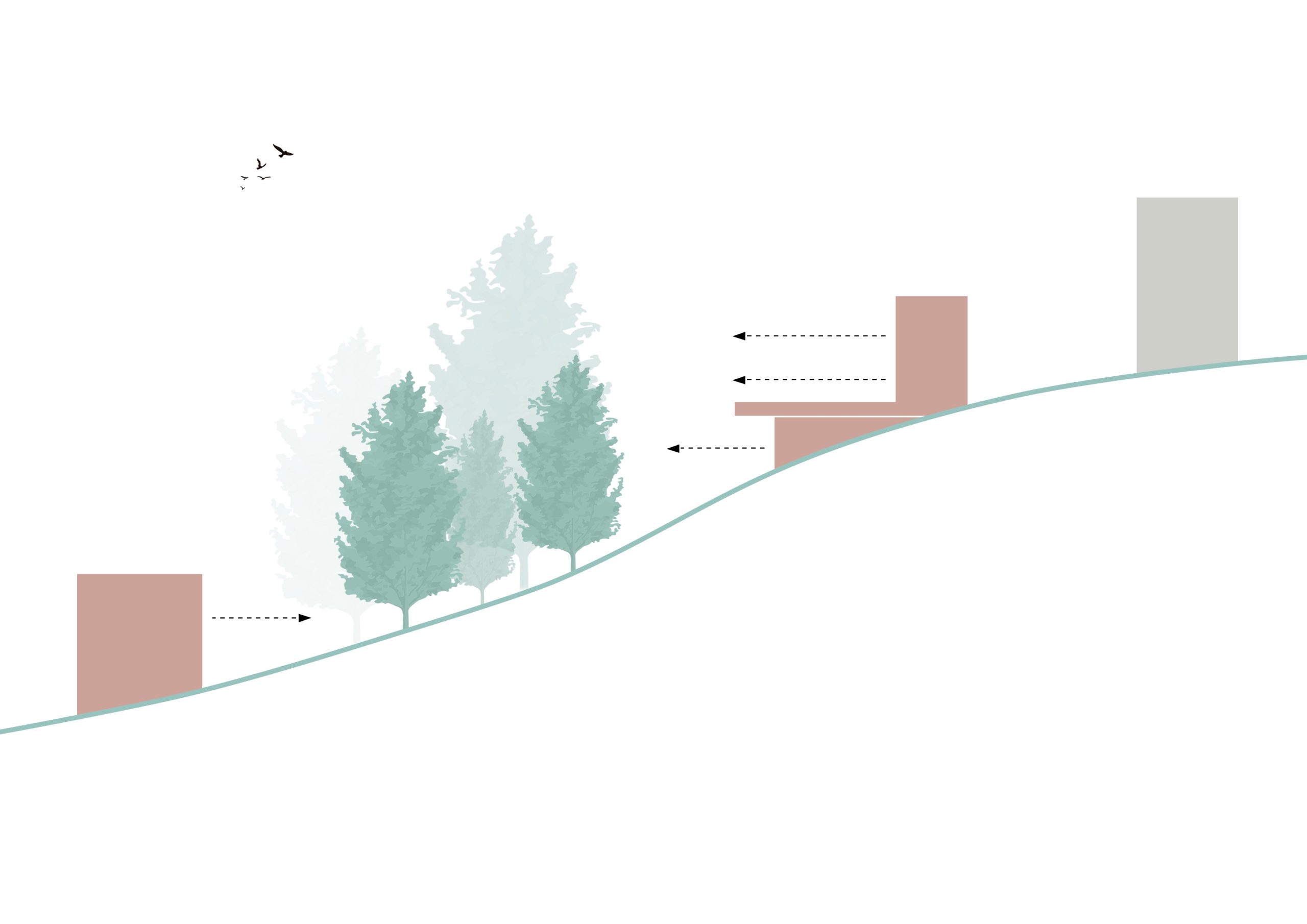
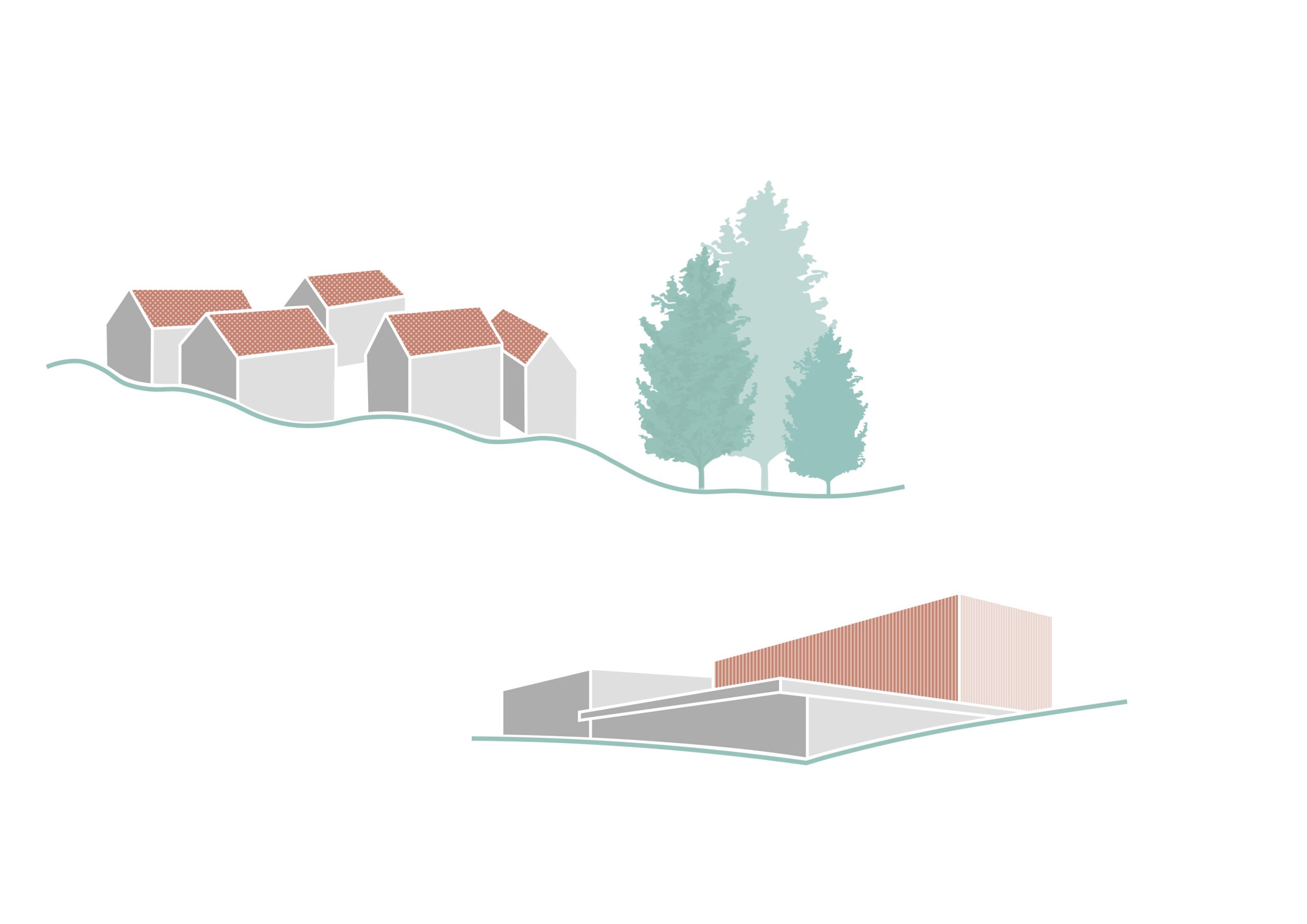
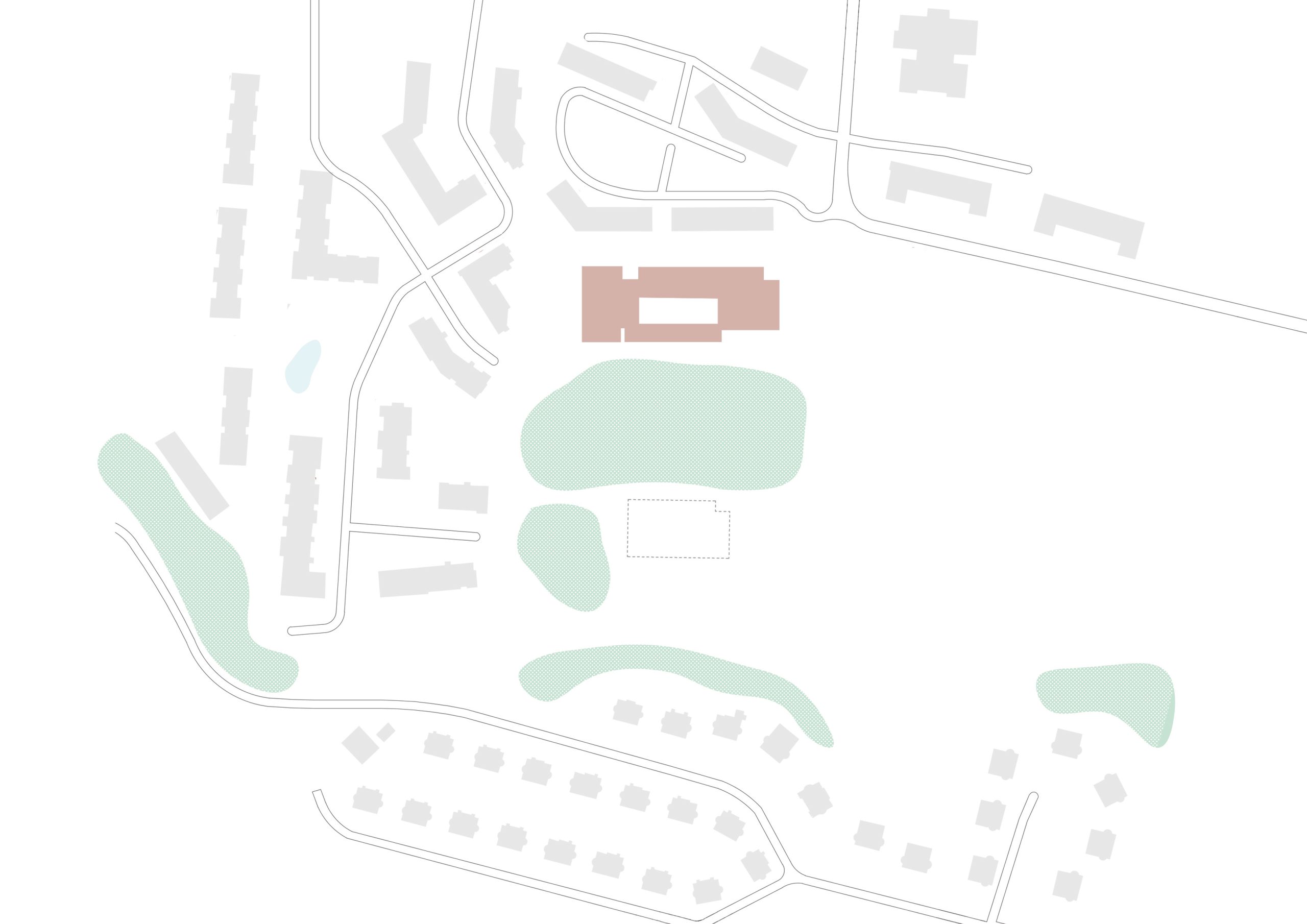
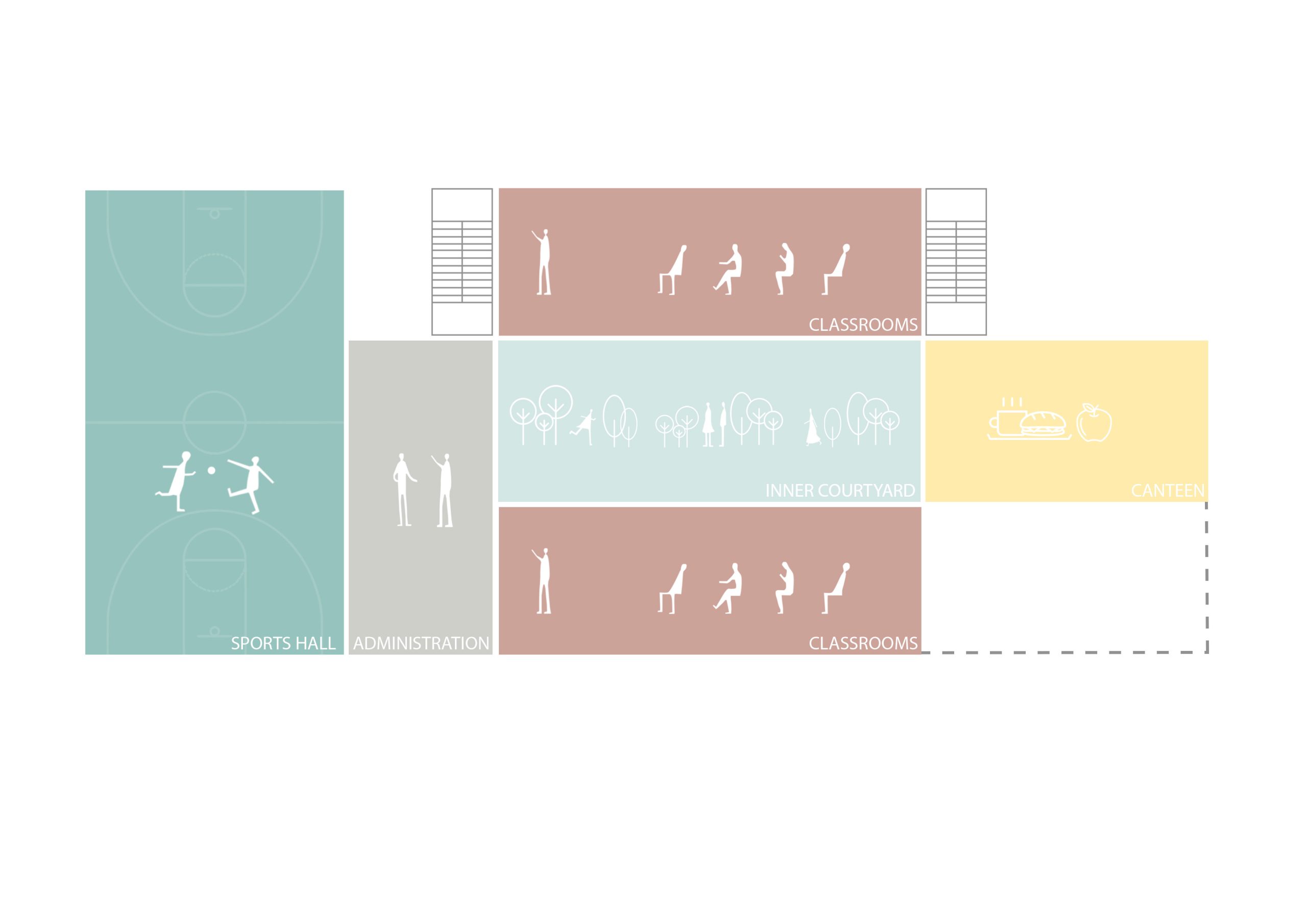
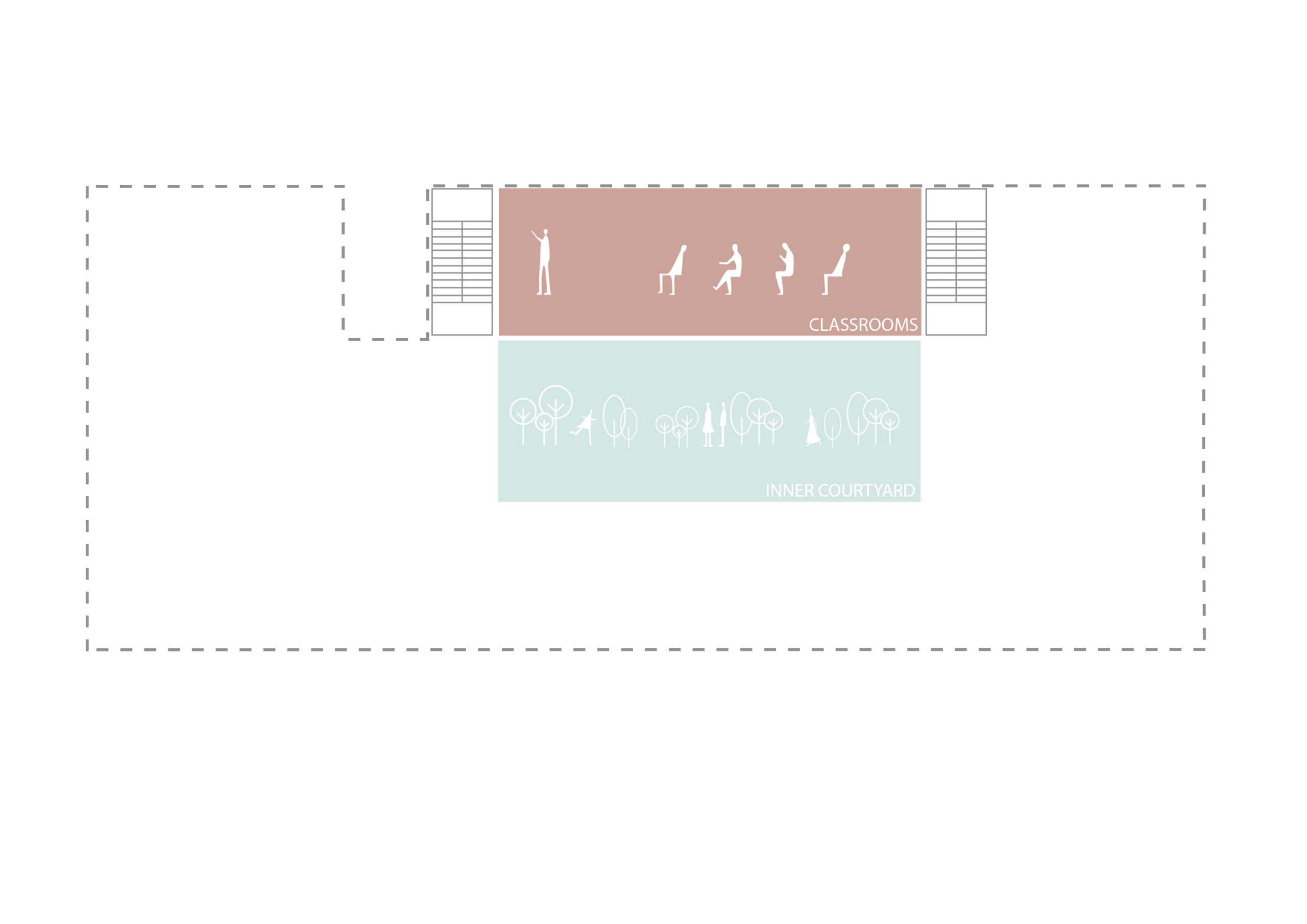
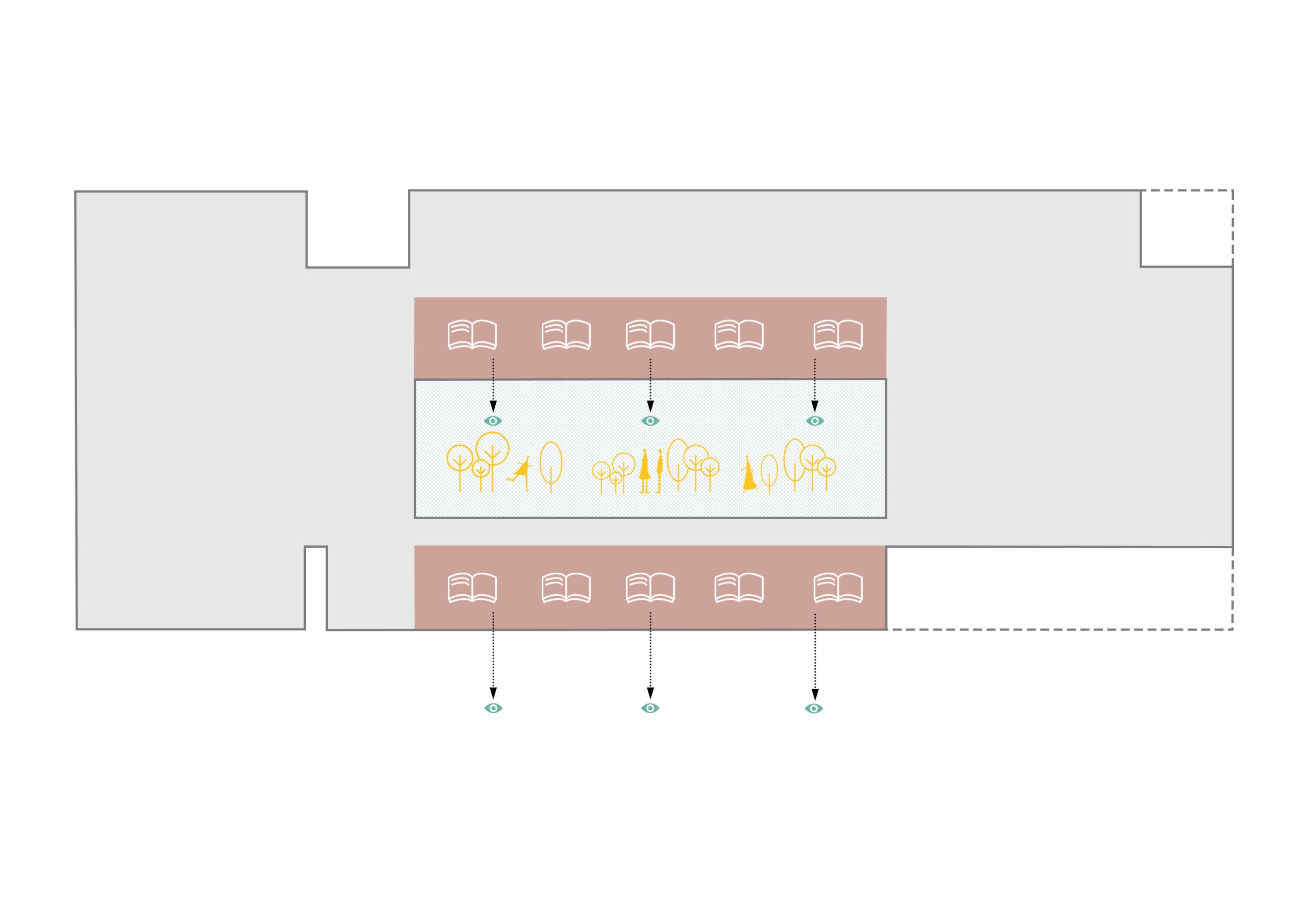
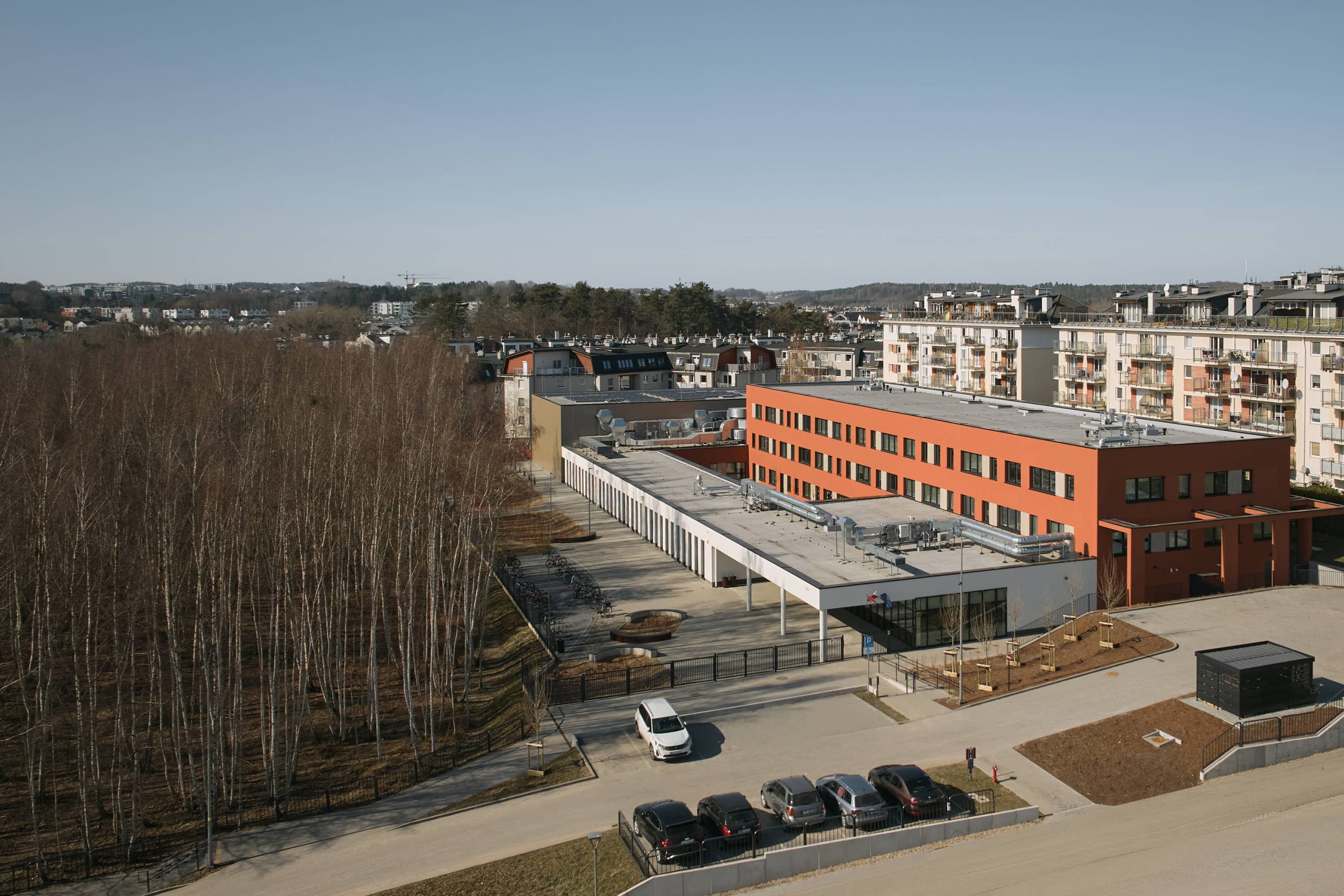
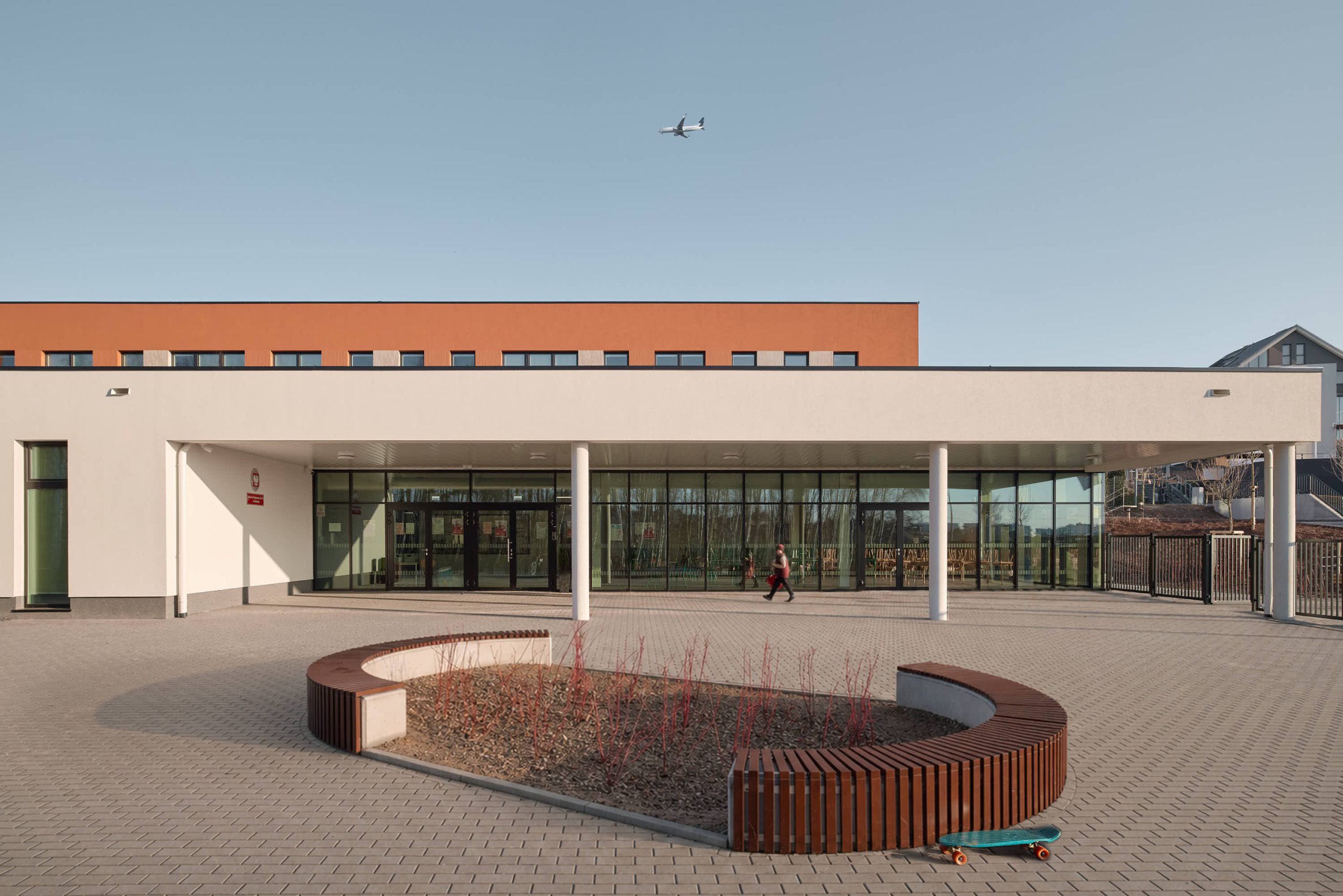
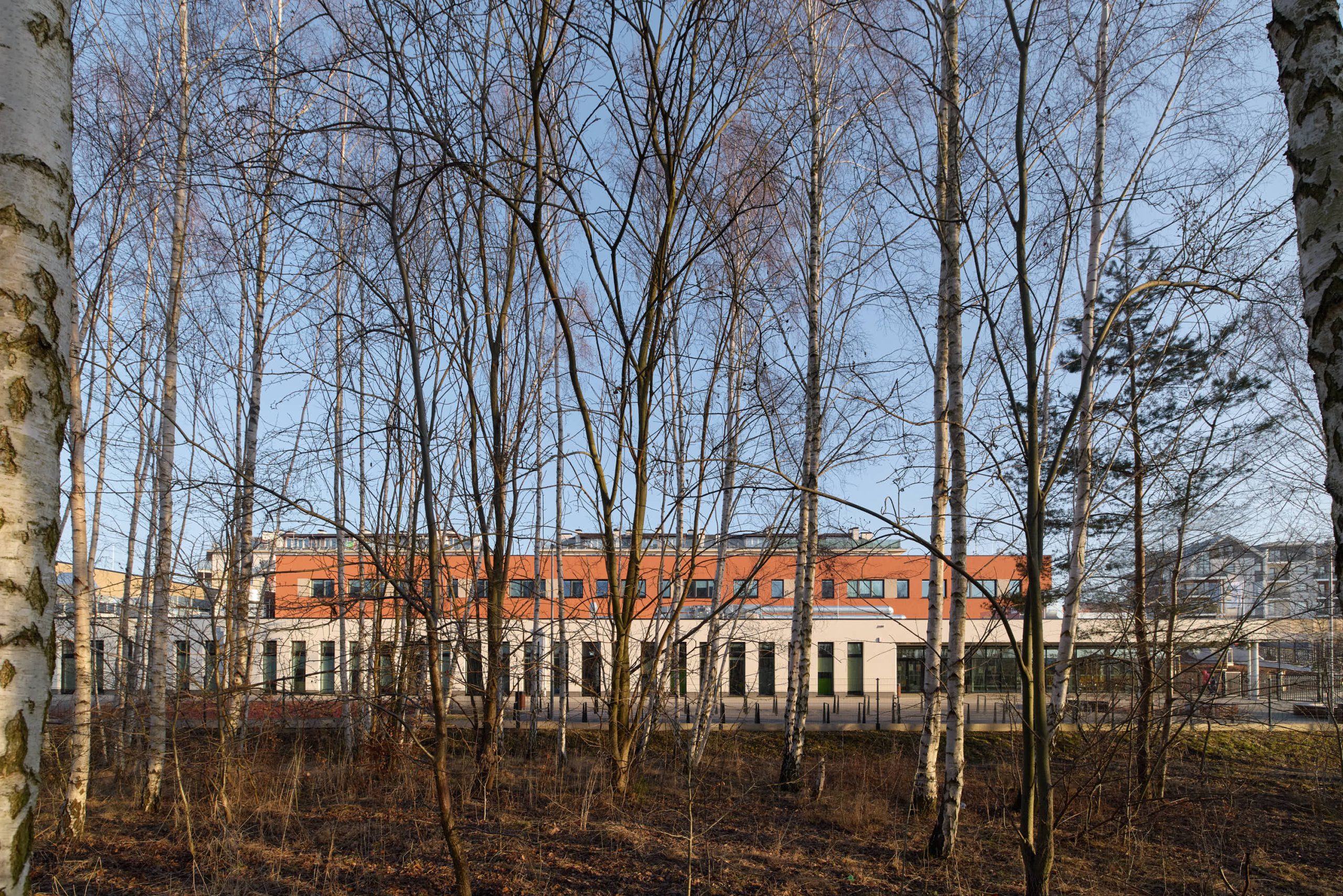
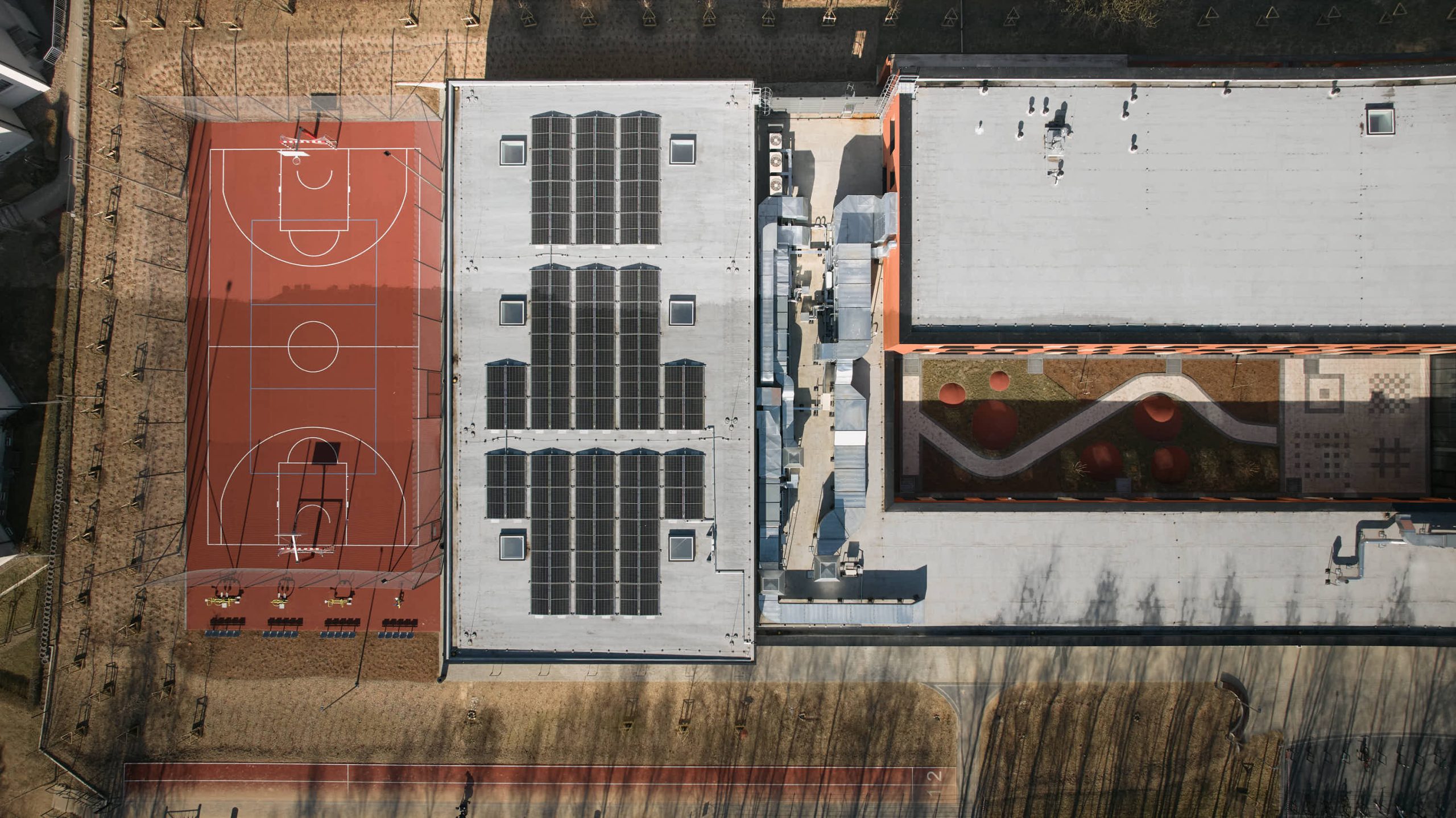
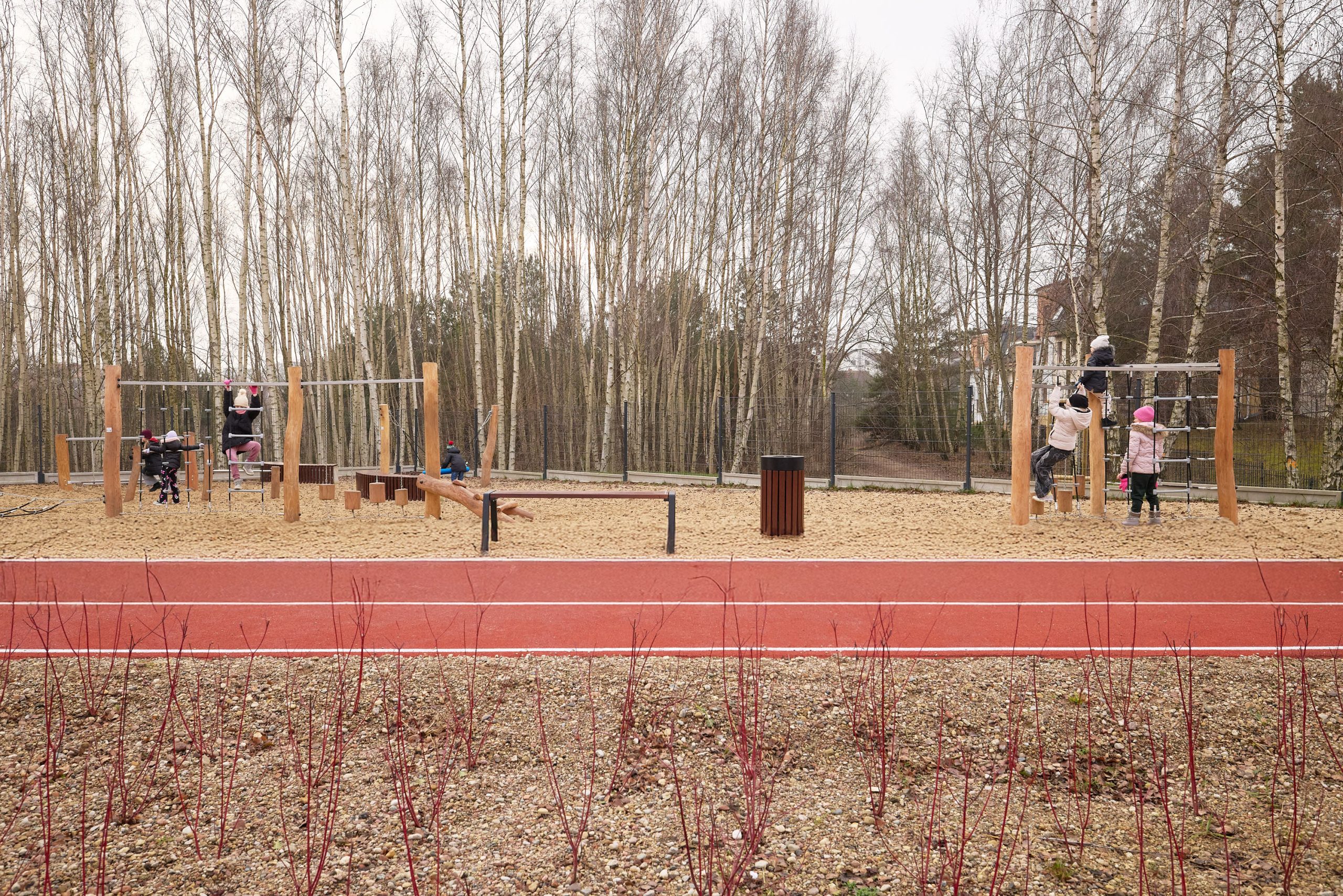
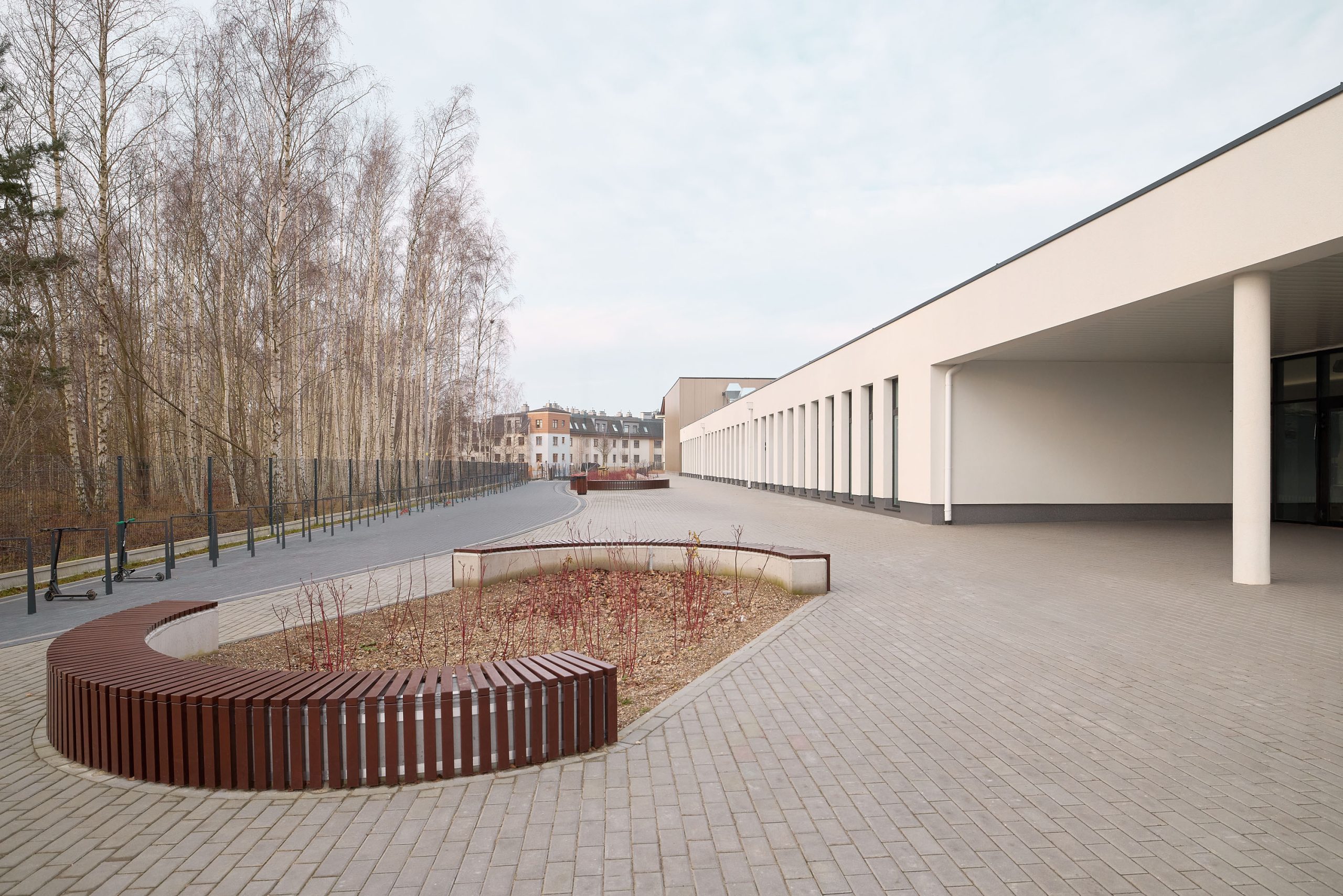
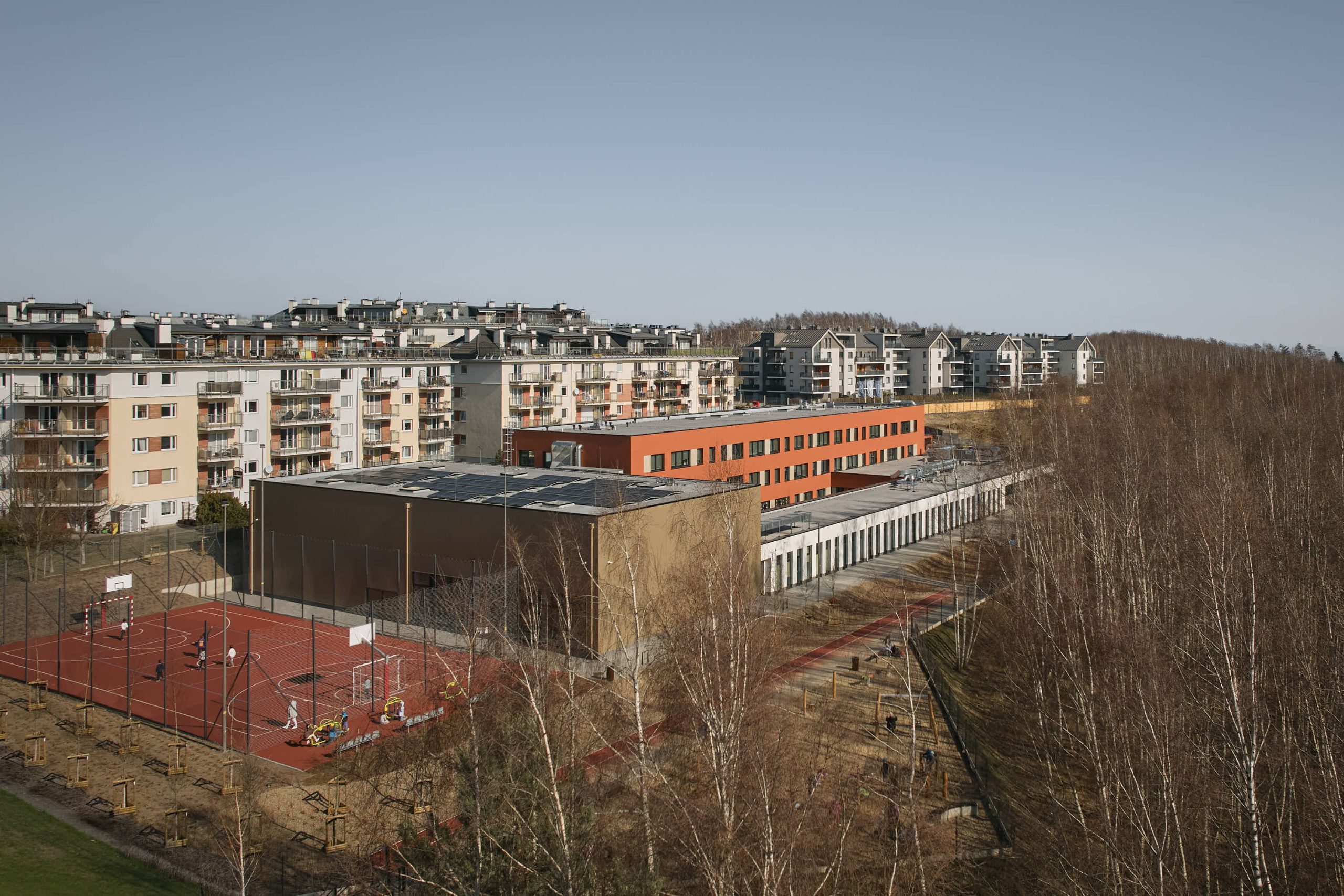
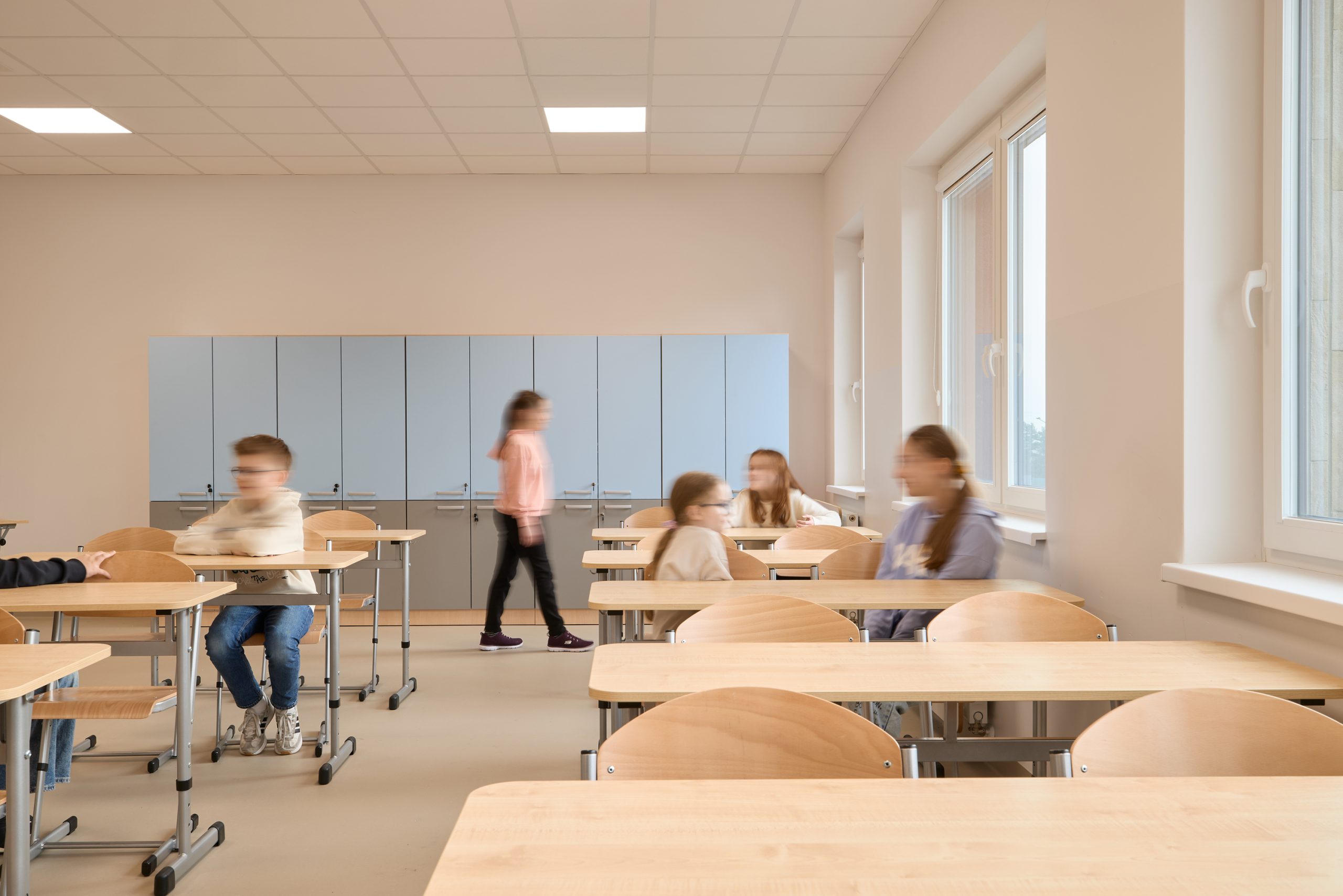
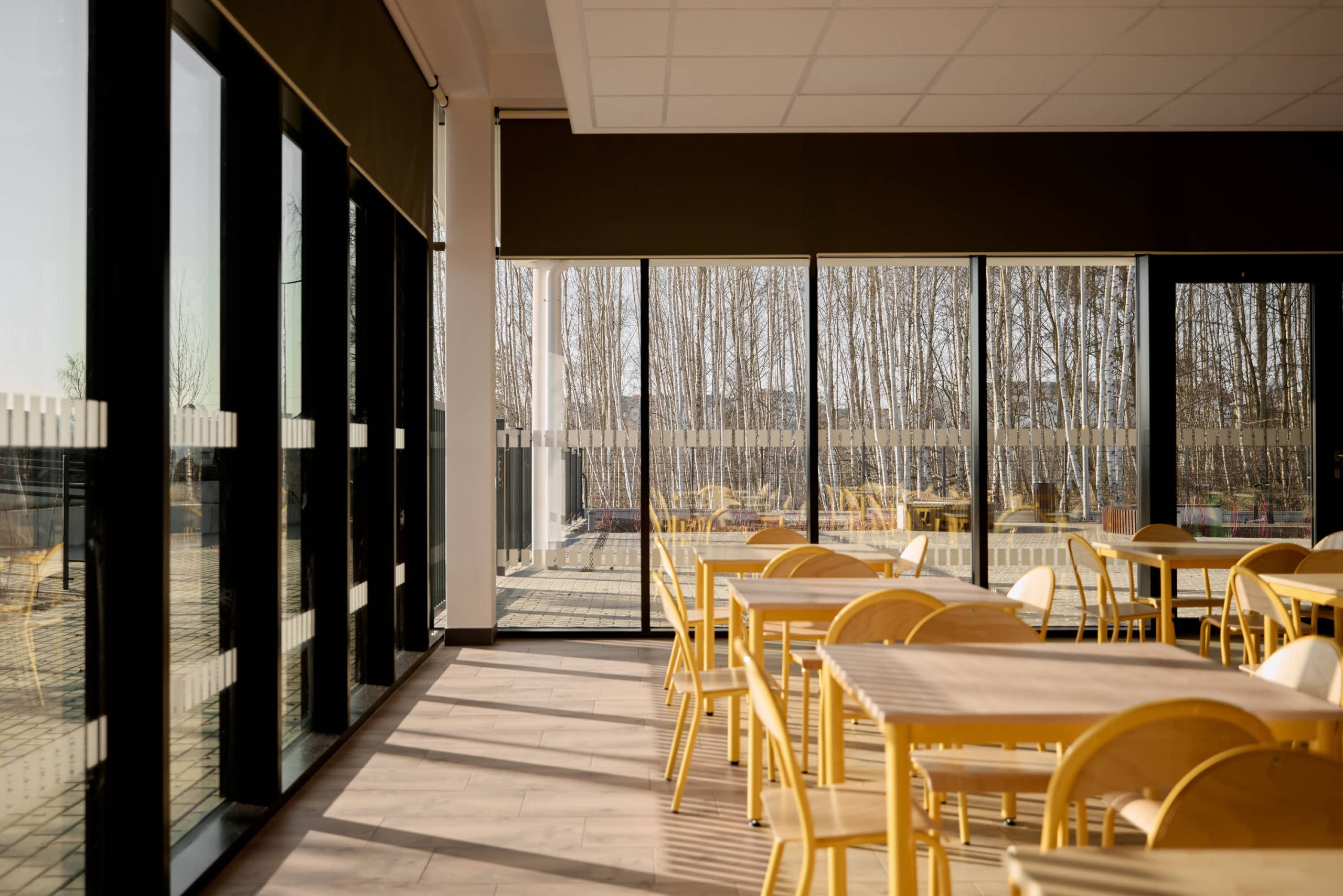
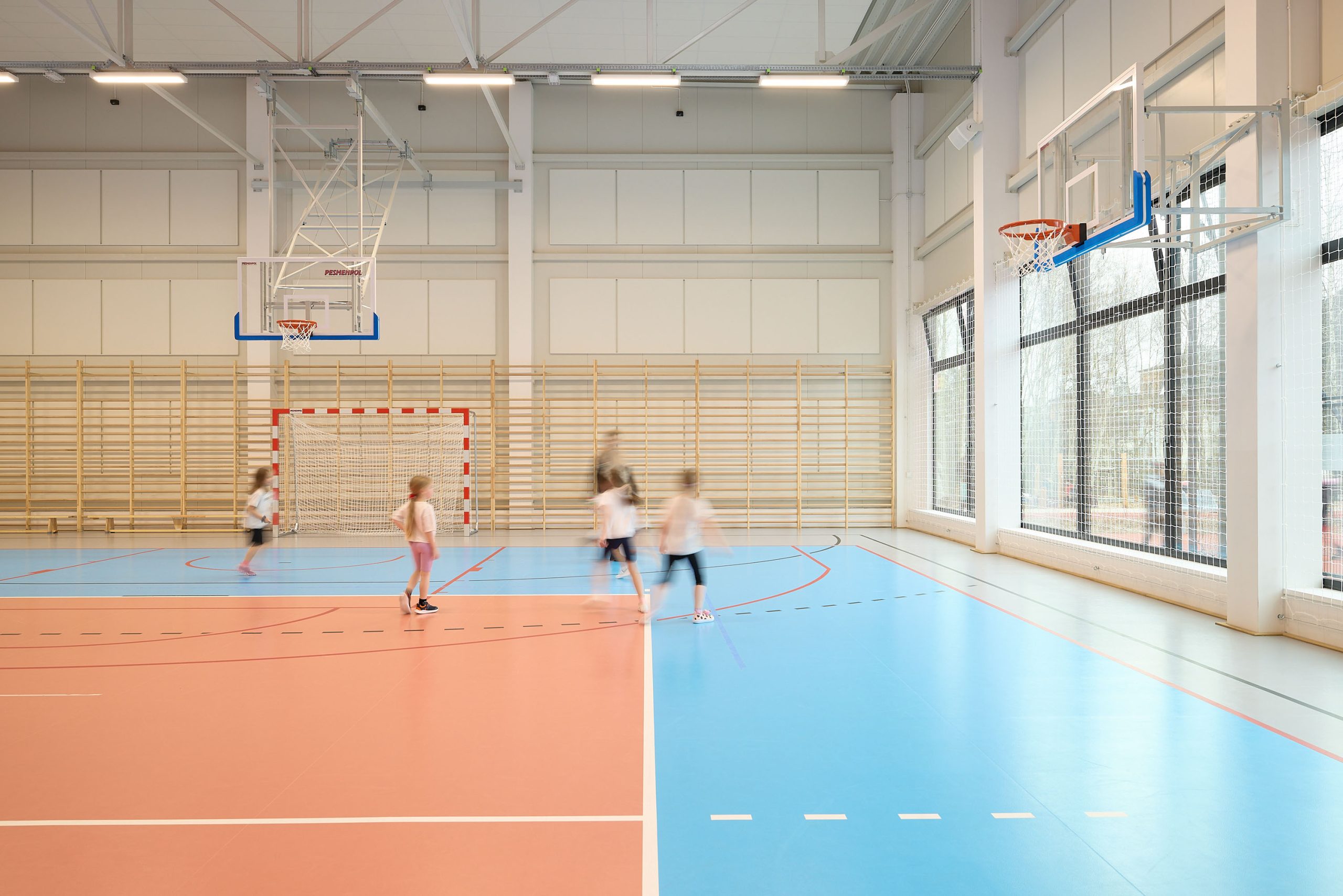
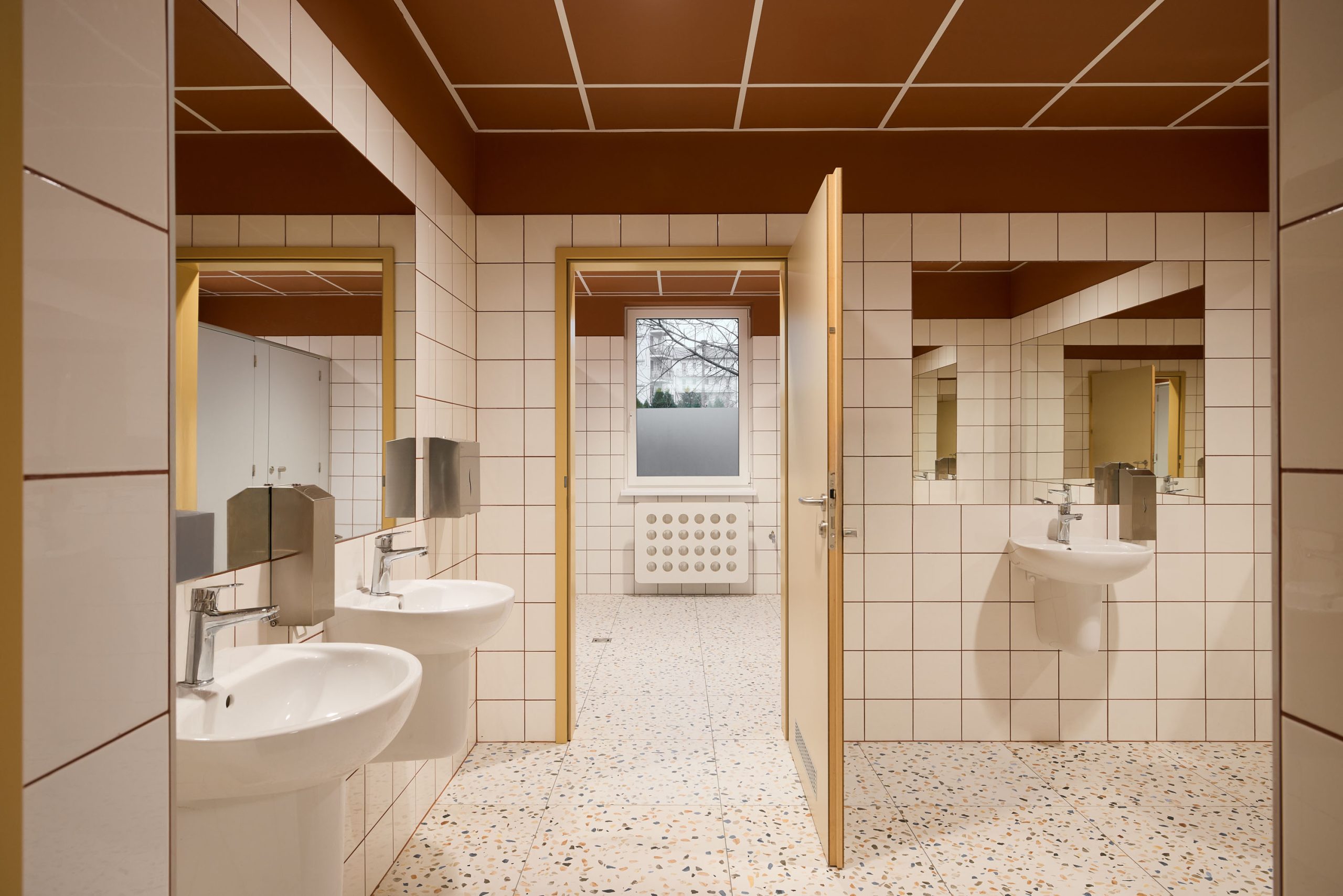
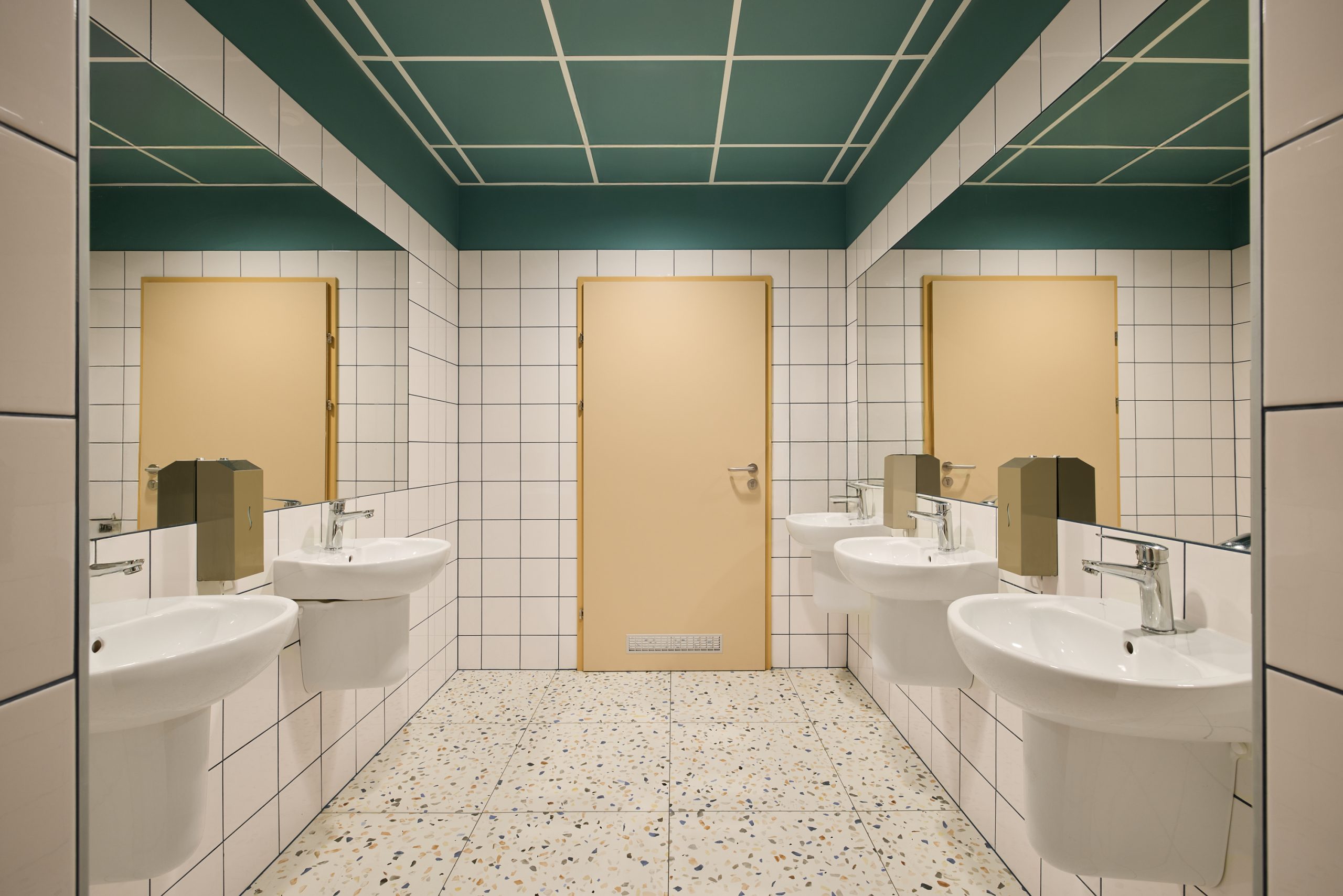
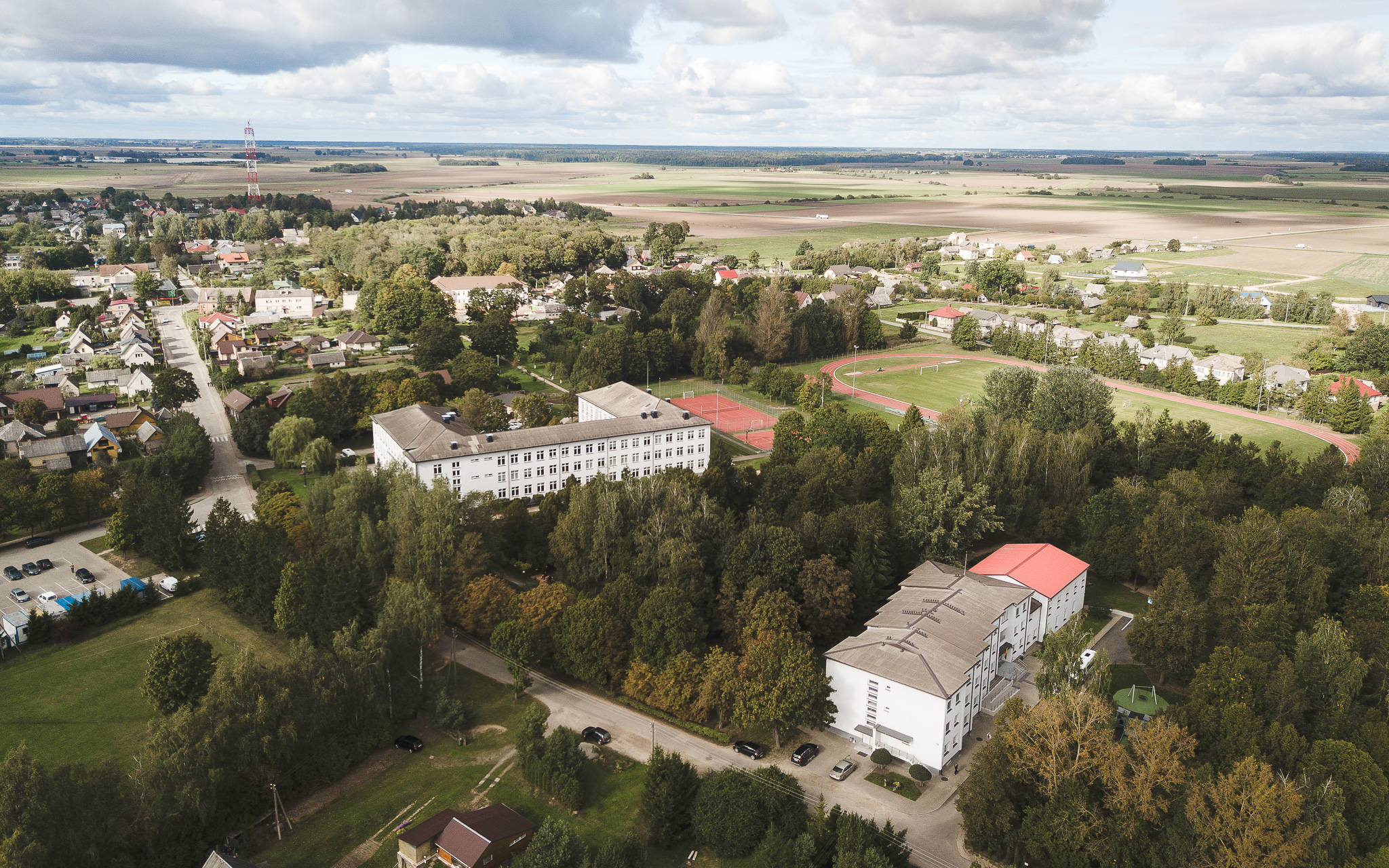
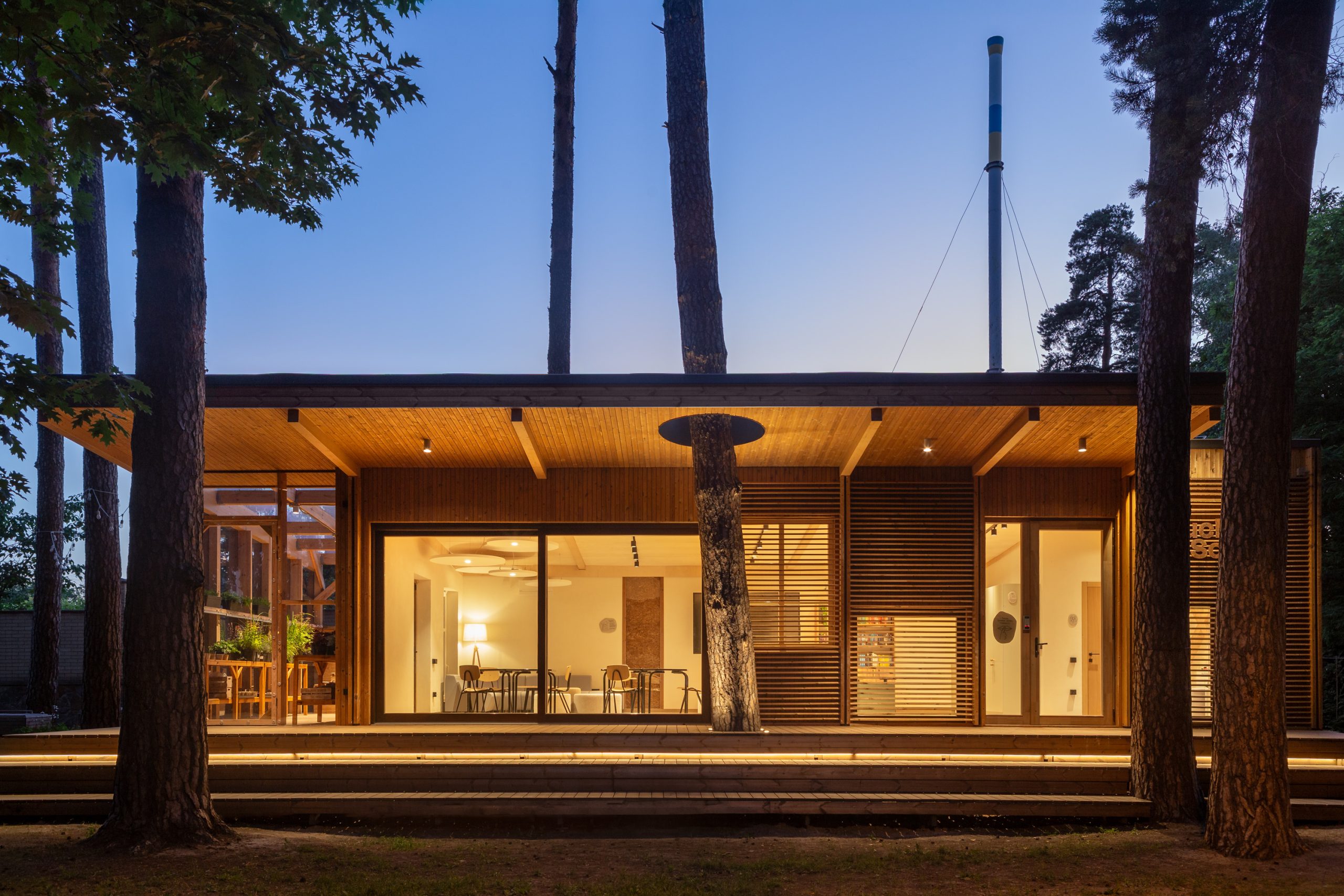
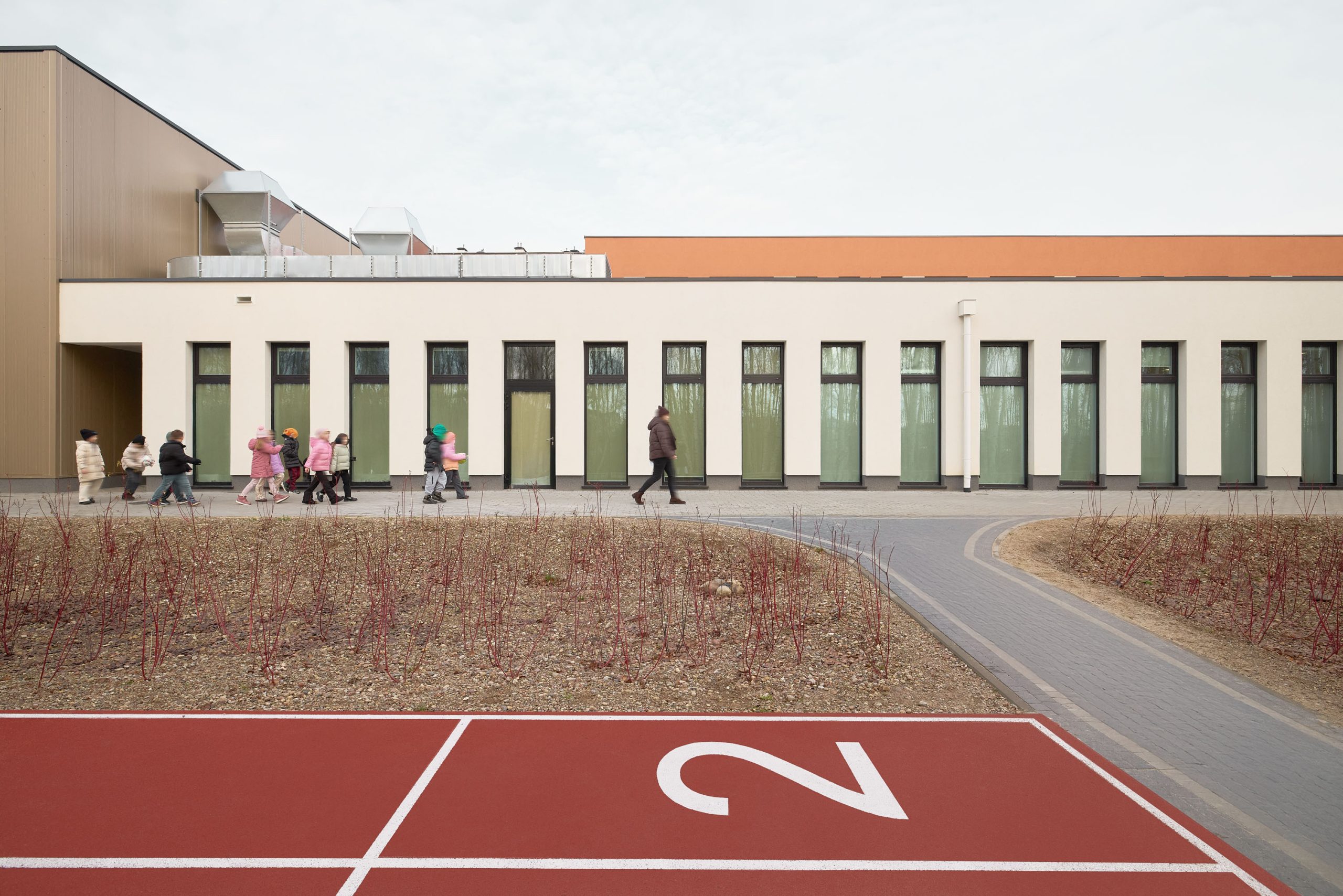
This project was realized through a public-private partnership, featuring a dynamic design that responds to the specific constraints of a narrow site. The building is composed of three interconnected volumes surrounding a central courtyard, offering views of the adjacent forest and the city skyline. Its architectural form follows the natural slope of the terrain, integrating a single-story gallery with multi-story volumes to create a cohesive "urban hill." The interior spaces are functionally optimized for various age groups, prioritizing natural light and adaptable classroom layouts. This versatility allows for both individual and group-based learning while giving the building a multi-functional character. Key facilities, including the sports halls, library, and canteen, are designed to serve the local community during non-school hours. Dedicated entrances ensure that public use of these facilities does not interfere with student safety or movement.
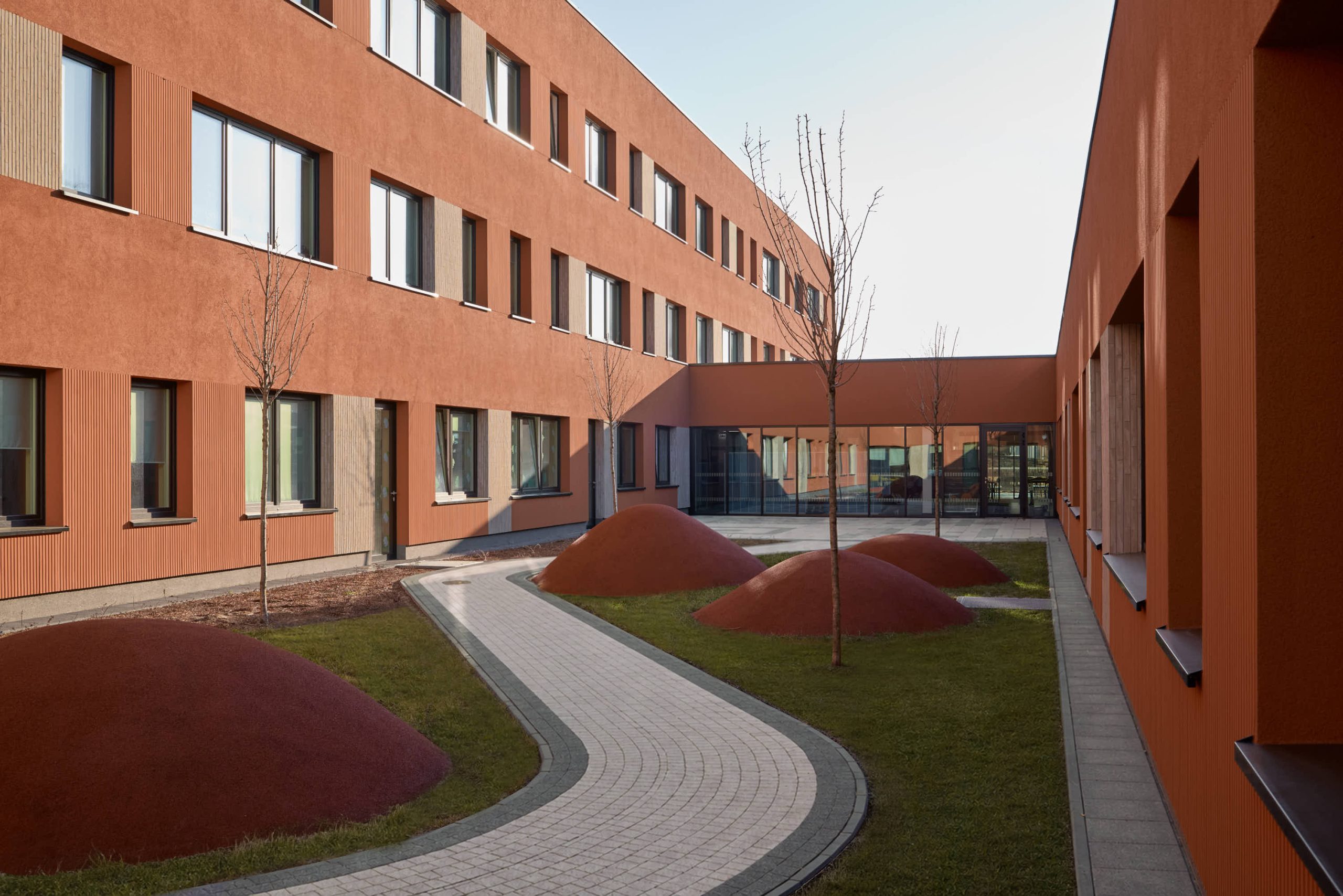
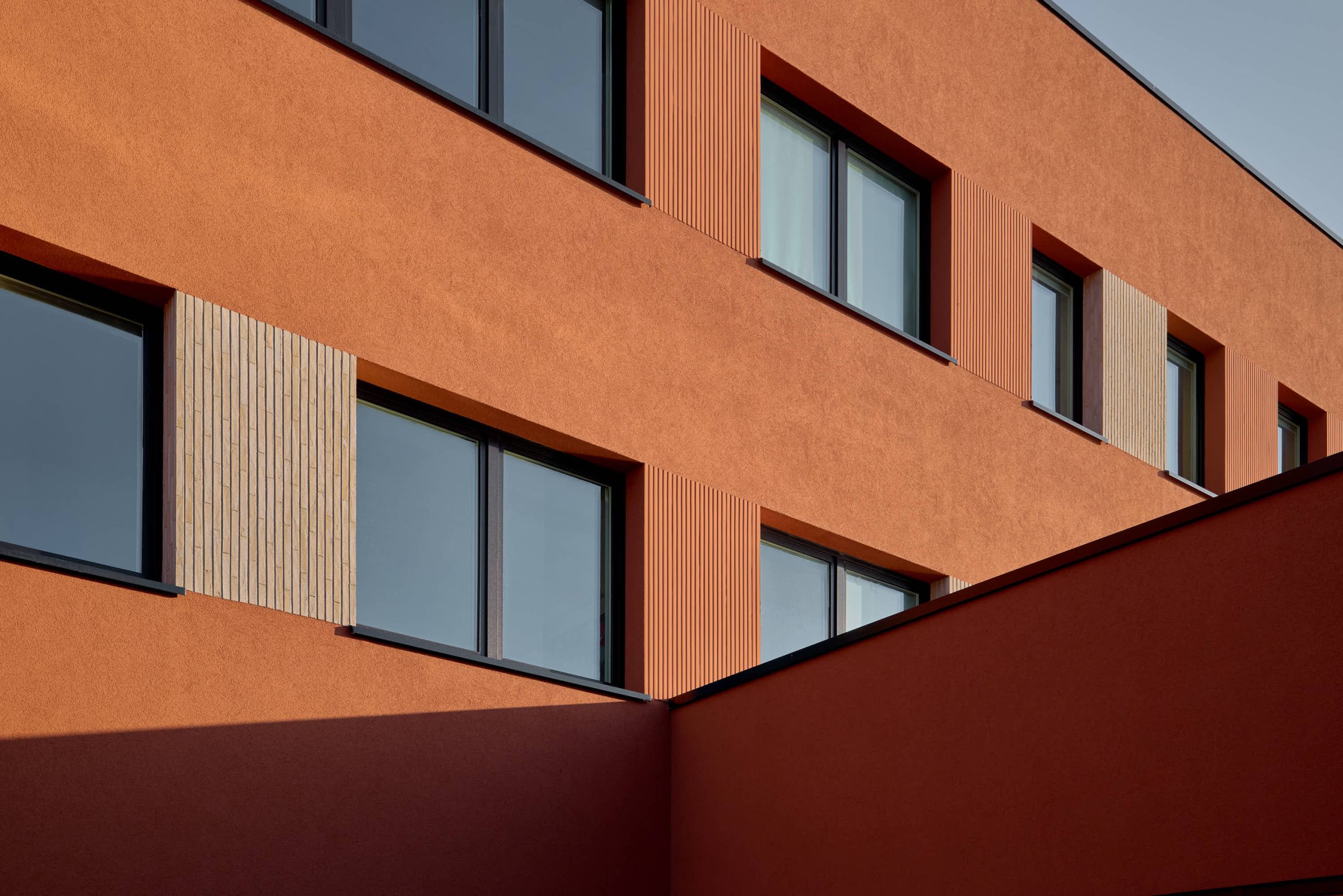
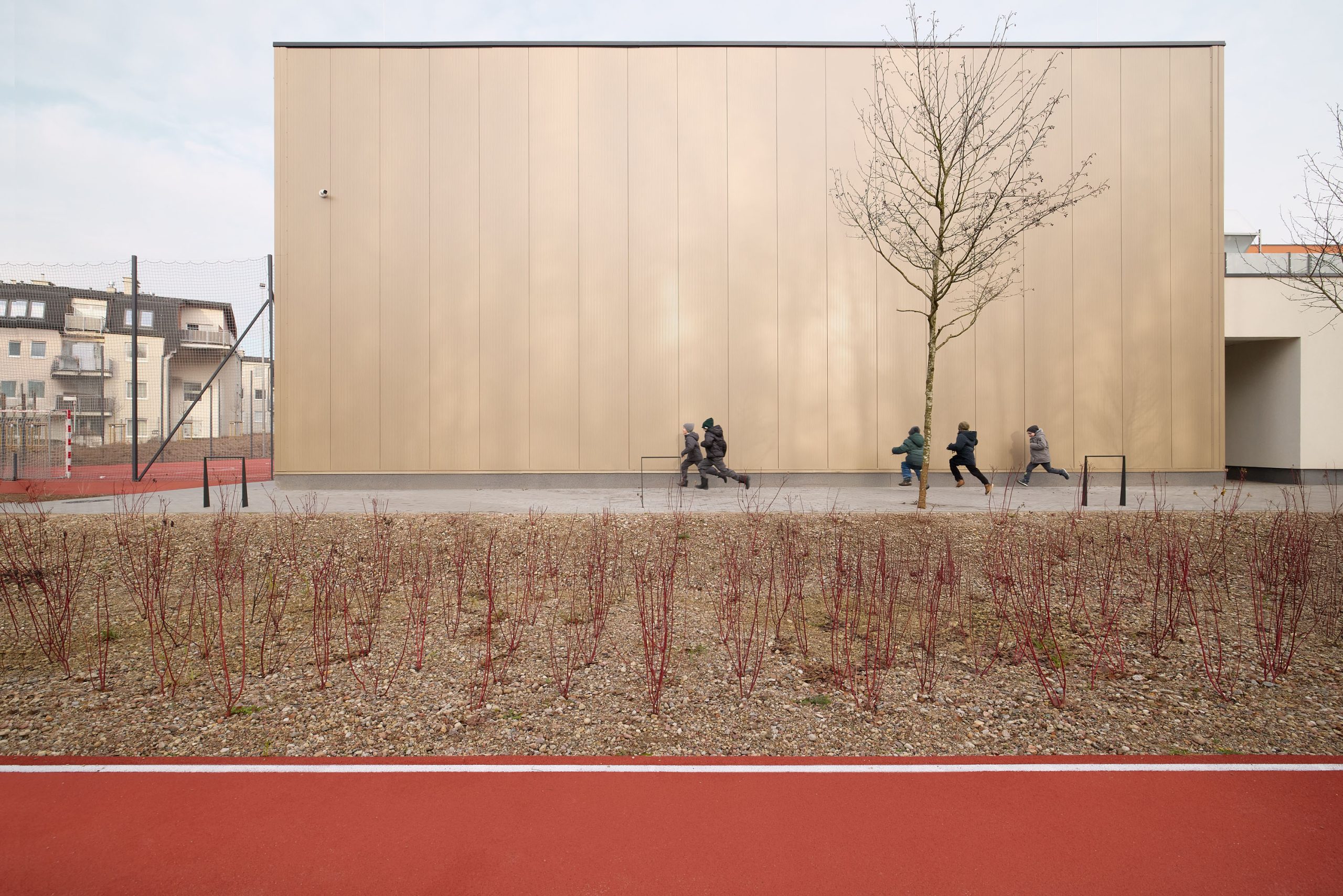
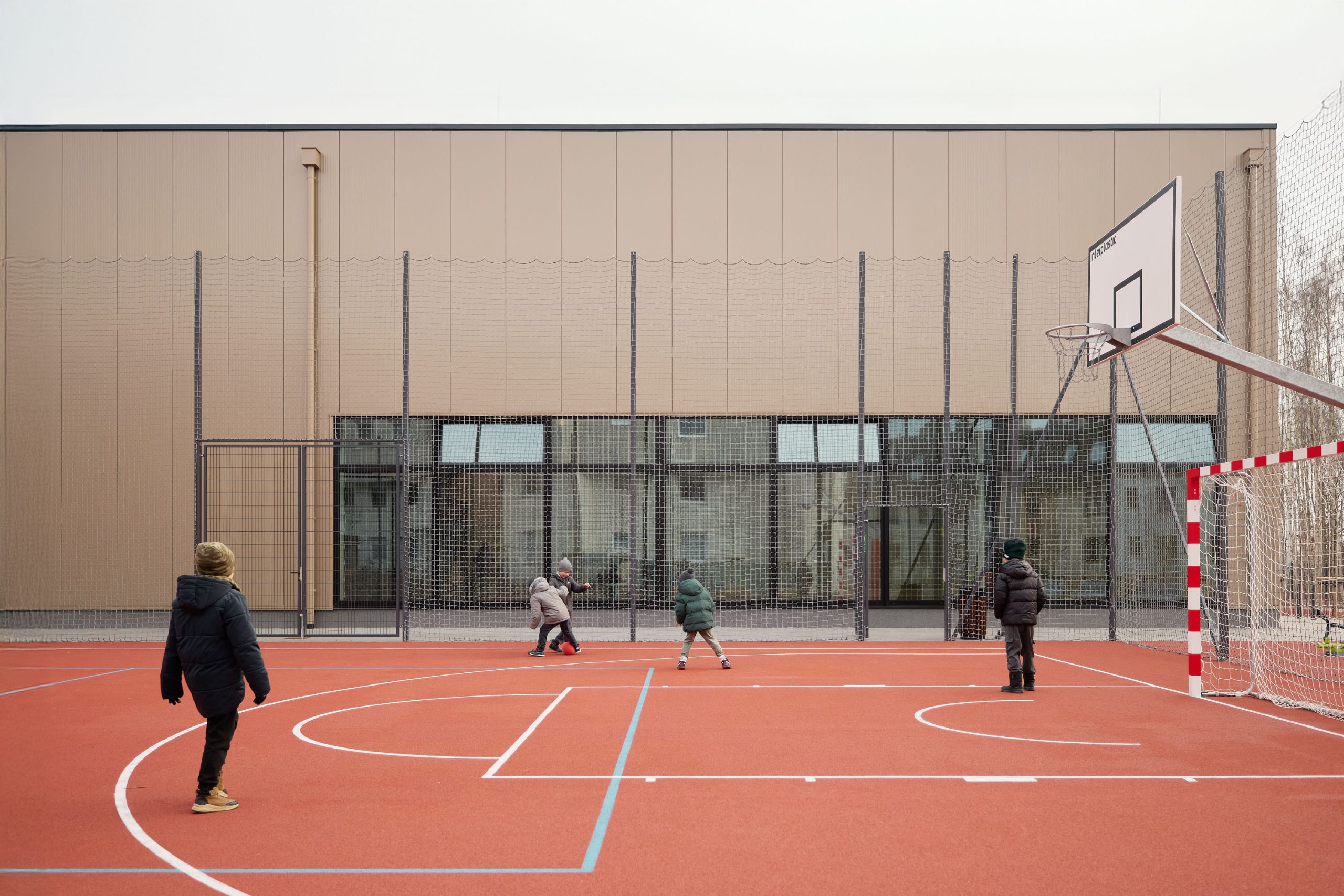
The inner courtyard is designed as a private green sanctuary for the school community, providing a quiet space for outdoor lessons and breaks. To manage logistics and noise, the site is divided into five distinct zones, keeping technical areas and sports fields away from the quiet learning environments. The facade uses earthy tones and high-quality composite panels that mimic the texture of wood while ensuring maximum durability. Sustainability is integrated through solar modules, a grey-water recycling system, and the planting of over 100 trees and shrubs. The design process navigated complex local zoning and strict ecological requirements regarding light and noise pollution. These regulations necessitated a compact spatial organization to maintain a balance between urban development and environmental protection. Although early concepts included floor-to-ceiling windows, the final design was refined to meet investor requirements and technical standards. The result is a resilient educational facility that harmonizes modern architecture with its natural and social context.
Concept Schemes